
Procurement teams have never had access to more data. Yet many organisations still struggle to answer a simple question:
Do we really know where all our money is going?
The uncomfortable truth is that a significant portion of indirect spend remains hidden from view. While leadership teams focus on strategic suppliers and major contracts, thousands of smaller transactions, subscriptions, licences, and supplier relationships continue to operate beneath the surface.
And that's where the real opportunity lies.
A Lesson in Visibility
At a recent business review, a global pharmaceutical organisation reflected on an 18-month spend management transformation project.
The goal was straightforward: consolidate suppliers, improve governance, and gain control of indirect, non-strategic spend.
The client began with a list of suppliers and identified several million pounds in annual spend they wanted managed. Eighteen months later, the expected savings and controls had been delivered.
But the biggest surprise wasn't the spend they knew about.
It was the spend they didn't.
 More than 81% of the spend eventually captured had not appeared in their original overview. What started as a supplier consolidation project became a visibility project, uncovering spend that was effectively invisible to the organisation.
The Scale of the Hidden Opportunity
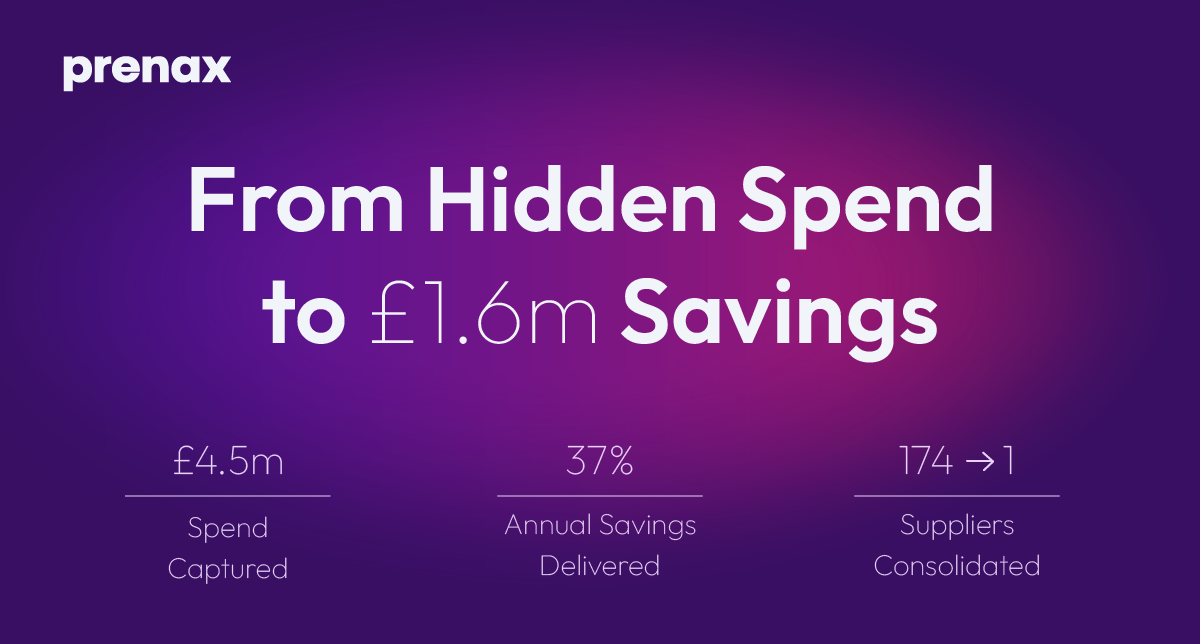
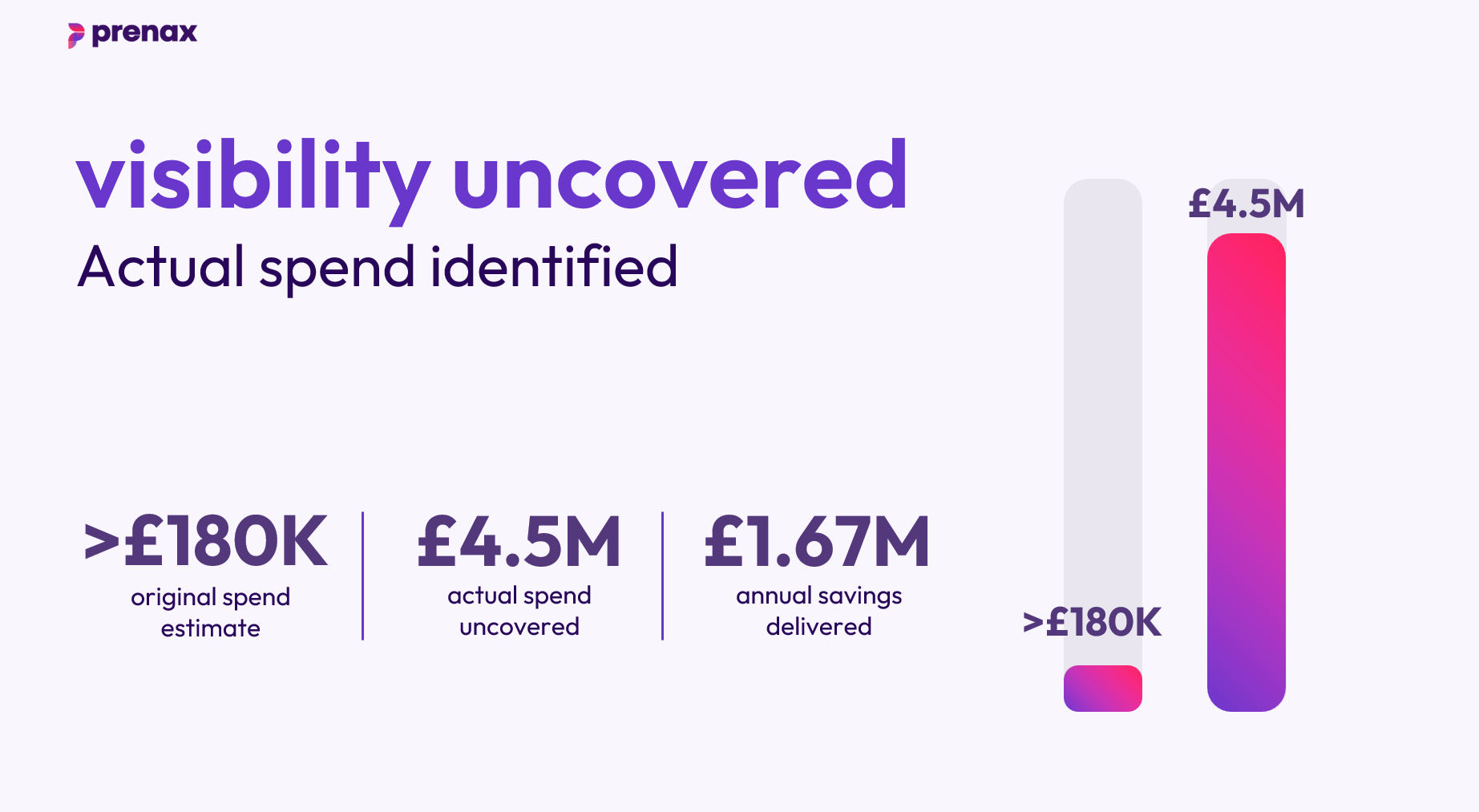
In another example, an organisation initially estimated its spend at approximately £180,000.
A detailed review uncovered the true figure: £4.5 million.
The result?
-
£1.67 million in annual savings delivered
-
37% spend reduction
-
Complete visibility across purchasing activity
-
Improved governance and supplier control
These outcomes weren't achieved through aggressive cost cutting.
They were achieved through one thing:
Visibility.
Why Hidden Spend Exists
Indirect spend is often spread across:
-
Thousands of suppliers
-
Multiple business units
-
Credit card purchases
-
Departmental budgets
-
Auto-renewing subscriptions
-
Former employee licences
-
Spreadsheet-based tracking systems
-
Manual procurement processes
The result is fragmented ownership and inconsistent governance.
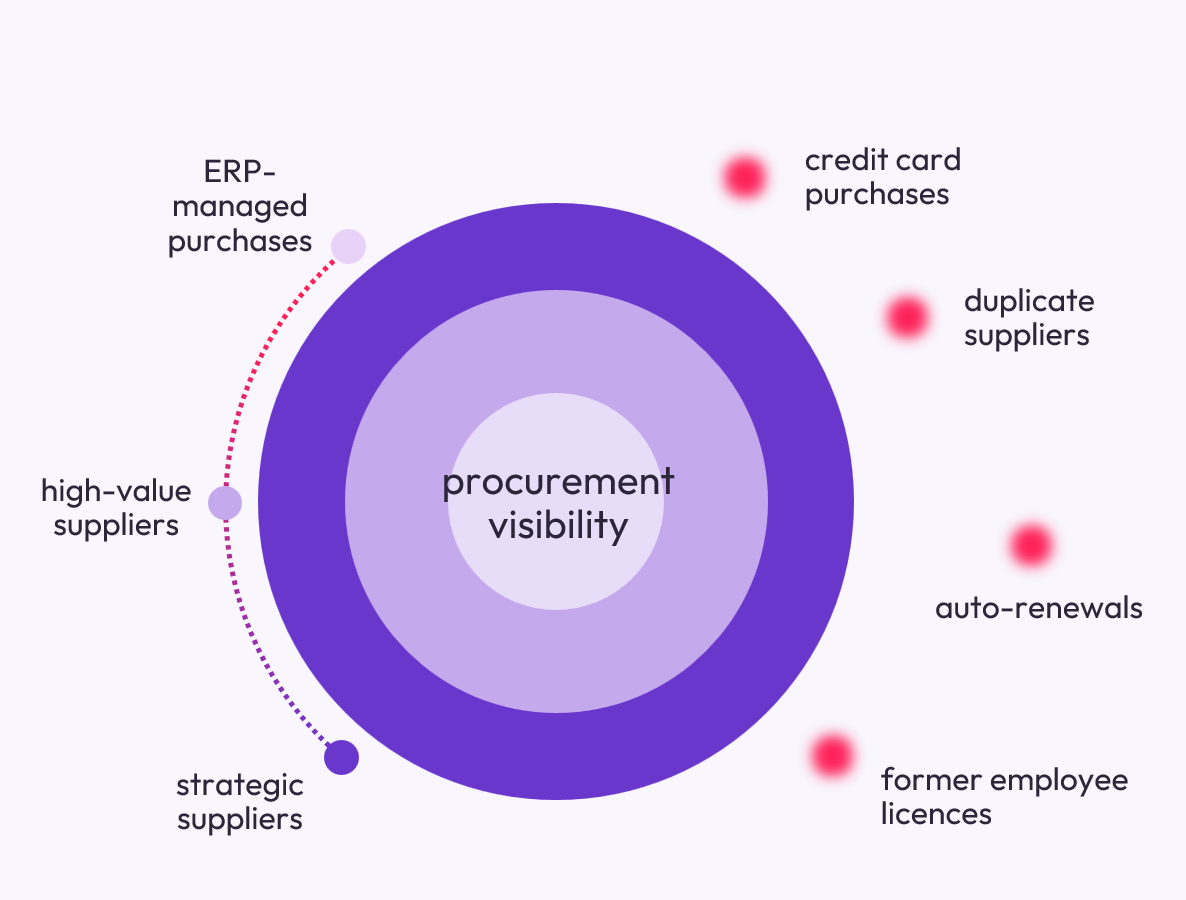
Even organisations with mature ERP systems often discover that a large percentage of transactions take place outside procurement's field of vision.
These purchases are rarely malicious.
They're simply difficult to track.
 The Illusion of Control
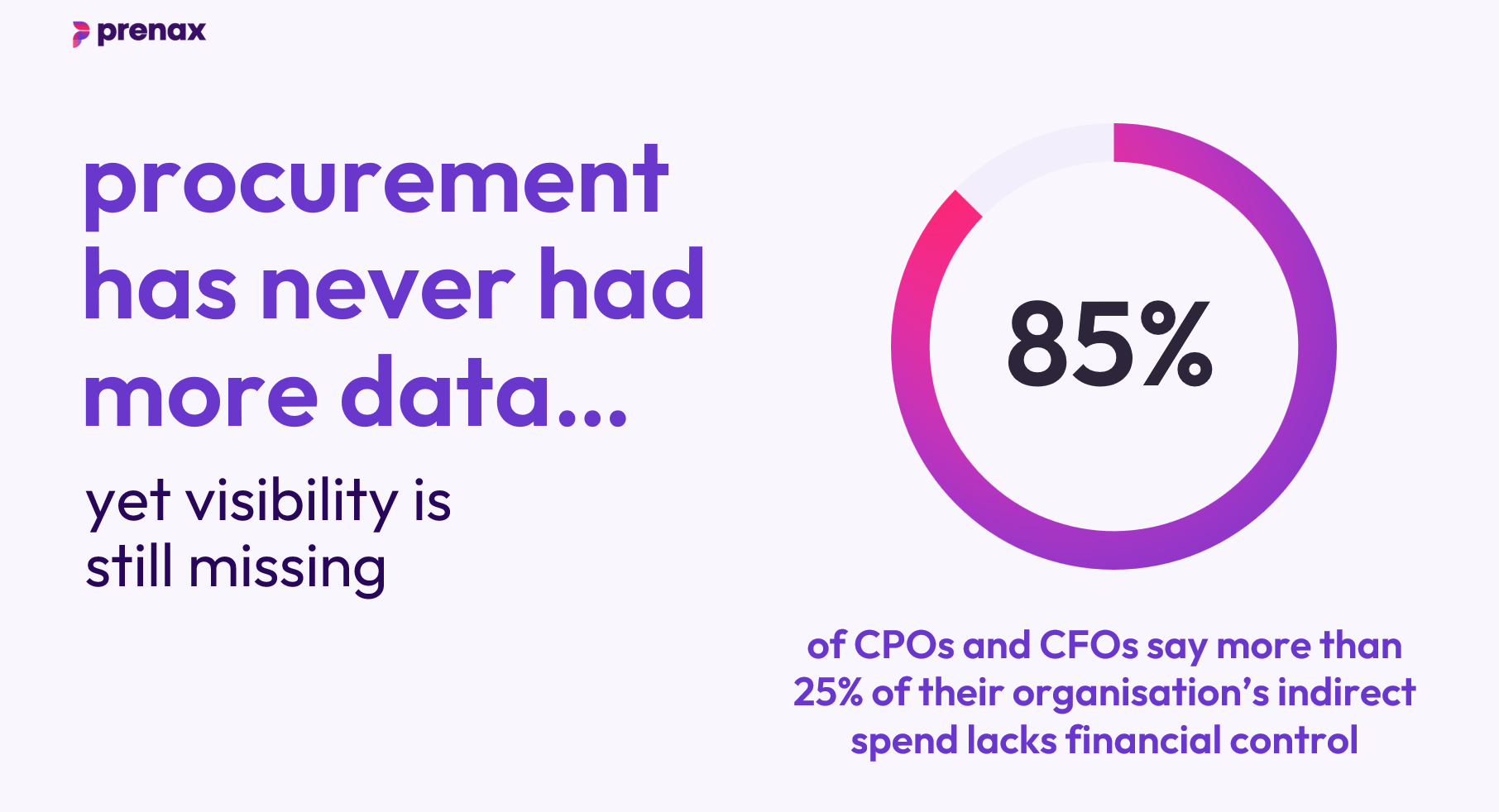
A recent survey of European CFOs and CPOs found that 85% believe more than 25% of their organisation's indirect spend lacks proper financial control.
This creates what might be called the "illusion of control."
Leaders see reports. Procurement sees approved suppliers. Finance sees budgets. Everyone has data. But nobody has the complete picture. And when visibility is fragmented, so is decision-making.
The Hidden Cost of Manual Procurement
Many organisations still rely on email requests, spreadsheets, manual approvals, and disconnected systems to manage suppliers and purchasing. While these processes may seem manageable, they often create inefficiencies, increase risk, and make it harder to identify unnecessary spend.
The biggest issue isn't the manual effort itself. It's the lack of visibility that comes with it. When data is fragmented, organisations can miss duplicate suppliers, unused licences, compliance gaps, and opportunities to reduce costs.
The real cost isn't the process. It's what the process hides.
Different Priorities. Same Objective.
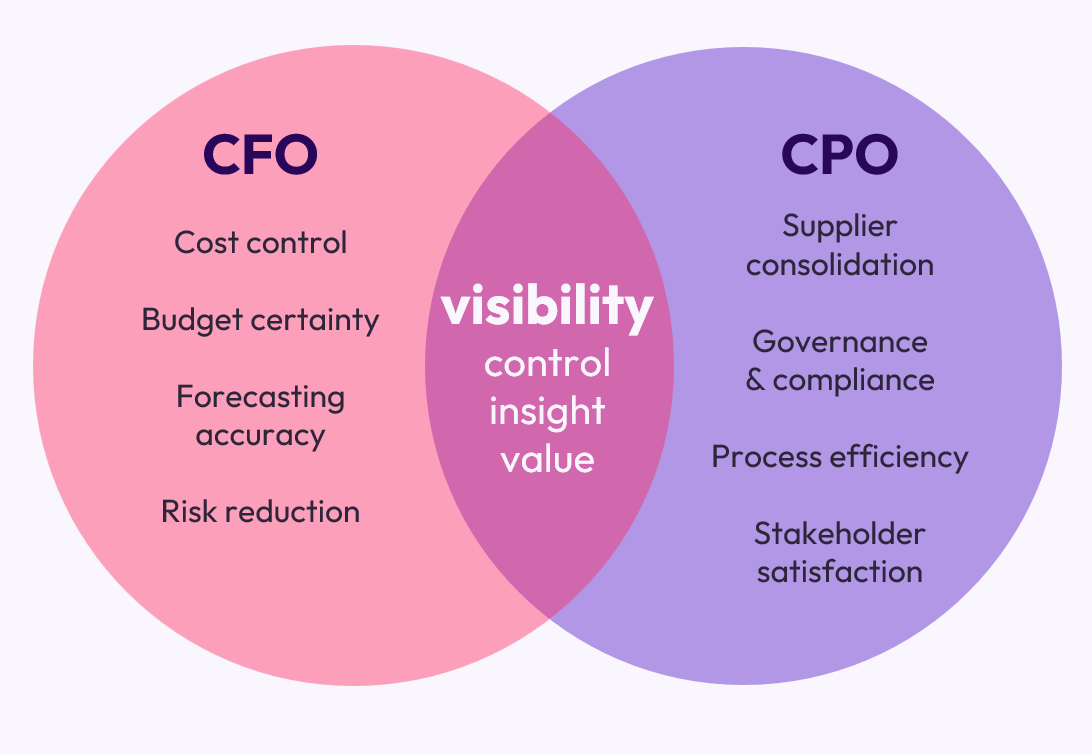 For CFOs, visibility enables:
-
Cost control
-
Budget certainty
-
Forecasting accuracy
-
Risk reduction
For CPOs, visibility enables:
-
Supplier consolidation
-
Governance and compliance
-
Process efficiency
-
Stakeholder satisfaction
Different priorities. Same goal. Control through visibility.
Turning Complexity into Control
Modern organisations don't have a spending problem. They have a visibility problem.
The challenge isn't the lack of data. It's connecting fragmented data points into a complete and actionable picture.
When procurement teams gain visibility, complexity becomes manageable. Duplicate suppliers are eliminated. Unused licences are identified. Processes become more efficient. Decisions become more informed. And value becomes measurable.
Ultimately, procurement transformation doesn't start with cost reduction.
It starts with seeing clearly.
Because what you can't see is costing you.
And visibility remains the foundation of control, efficiency, and long-term value.
How much of your indirect spend is truly visible today?
Many organisations discover that their biggest savings opportunities aren't found through negotiation, but through uncovering spend they didn't know existed. If you're looking to gain greater control, visibility, and value from your supplier base, the team at Prenax can help you turn hidden spend into actionable insight.
Source: Efficio, The Illusion of Control in Indirect Spend, European CFO & CPO survey (n+300), 2025.